Space
Adjust distance, channel width, boundary clarity and route complexity.
Pitchfold South uses environmental and activity-level options rather than profiles, diagnoses or participant records.
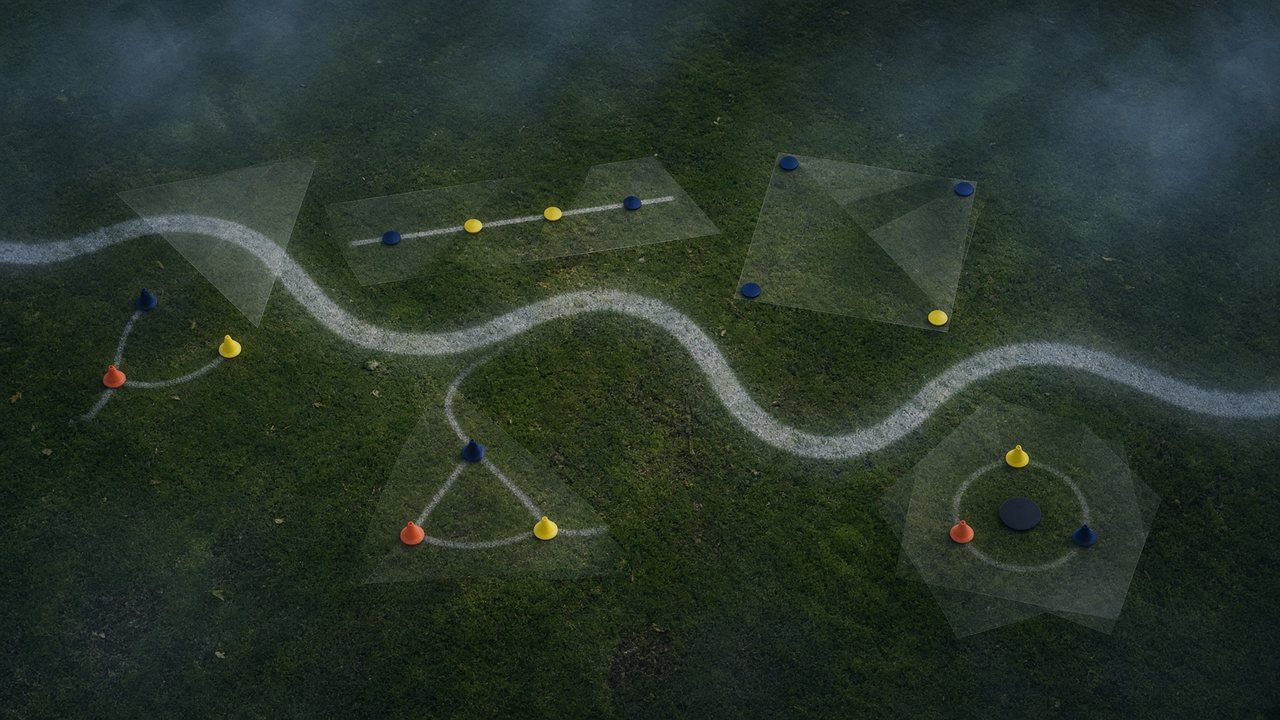
Each learning card can be reconsidered through these six lenses. An adult might widen a channel, slow a sequence, offer a different role, change a demonstration signal, simplify equipment or add recovery time—without asking the app to know who a participant is.
Adjust distance, channel width, boundary clarity and route complexity.
Change tempo, repetition length, pressure arrival and pause frequency.
Offer active, observing, feeding, organising or rotating contributions.
Pair spoken instruction with demonstration, gesture and visible markers.
Change ball, marker, target and zone size only when appropriate and safe.
Build predictable reset points and sufficient physical and cognitive pause.
The app has no participant names, health fields, diagnoses, rankings, attendance, free text or export. Inclusion remains a present-tense adult design responsibility, supported by generic prompts rather than stored personal information.